

The primary treatments for pain are over-the-counter nonsteroidal anti-inflammatory drugs (NSAIDS) and opioids, which are effective for managing acute pain, but are less effective in treating chronic pain, and are accompanied by intolerable side effects. Opioids rapidly result in tolerance and are responsible for a large proportion of opioid-related overdoses. Thus, there is an urgent need for alternative pain medications.
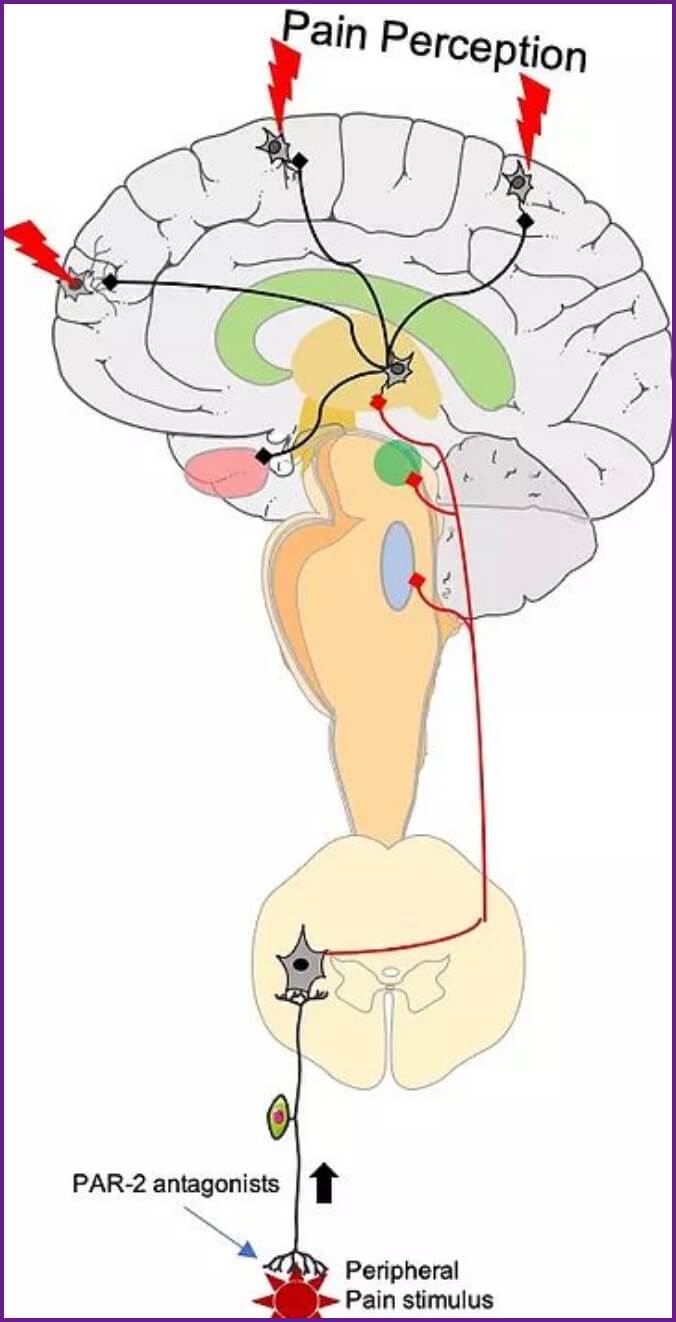
In chronic pain conditions, signals within the cell modify TRP channels, such that they open more readily. This results in a lower threshold for activation of the nociceptors and the development of hyperalgesia. Mast cell tryptase is released at peripheral nerve endings, where it activates PAR-2, leading to sensitization of TRP channels and thus contributing to hyperalgesia. PAR-2 further amplifies the pain signal by increasing the release of excitatory neurotransmitters that activate TRP channels, and by promoting the release of inflammatory mediators, such as prostaglandins (the target of NSAIDs). PAR-2 is a promising alternative for treatment of chronic pain because it can be inhibited peripherally to prevent the sensitization of pain receptors that underlies chronic pain. In this way, we can treat both the cause and the symptoms of chronic pain.


